

As someone who has spent years rooted in this community—working alongside neighbors, organizing events, and now stepping up to serve as your Ward 1 City Councillor—I have always believed that our strength as a city comes from looking out for one another. But right here in Welland and across the Niagara region, one of our most fundamental pillars is facing an unprecedented squeeze: our public healthcare system.
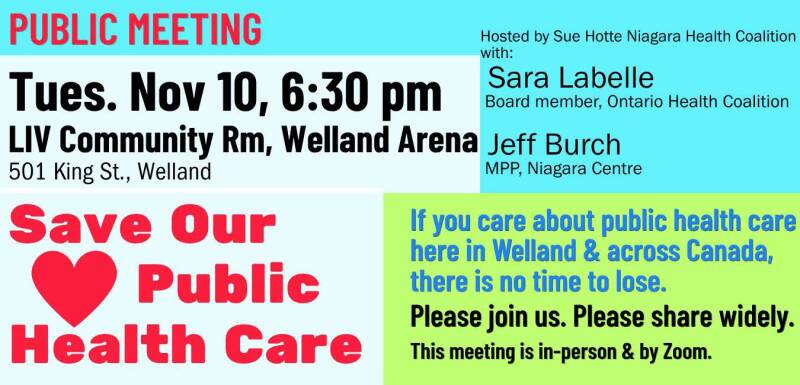
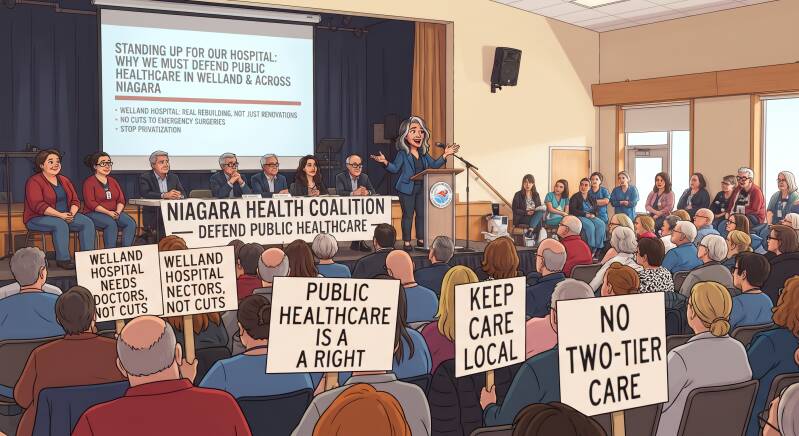
Recently, the Niagara Health Coalition—led by tireless advocates like Sue Hotte—hosted a crucial community town hall. We were joined by passionate voices, including Ontario Health Coalition board members Sara LaBelle and Dr. Dick Zaltman, alongside Niagara Centre MPP Jeff Burch. As a room full of residents, healthcare professionals, and local leaders—including Mayor-elect Pat Chiocchio, Ward 3 Councillors John Chiocchio and Sharmila Setaram, and myself—listened to the data and personal stories shared that evening, the message was unmistakable: our public healthcare system is being systematically underfunded and steered toward a two-tier, U.S.-style commercial model.
Here is a closer look at what the speakers revealed, what is at stake for Welland, and how we can fight back together.
1. The Realities of Welland Hospital: Restructuring vs. Real Rebuilding
We all remember the massive community fight we waged years ago to keep the Welland Hospital open when the original plan was to shut its doors entirely. Thanks to that grassroots mobilization alongside leaders like former MPP Cindy Forster and Frank Campion, our hospital survived and remains part of the future landscape.
Today, Niagara Health points to upcoming multi-million dollar phased renovations at the aging Welland Hospital to accommodate 60 complex-care beds and 35 residential addiction-treatment beds shifting from Port Colborne and Fort Erie. But as MPP Jeff Burch and local advocates pointed out, renovations are not the same as the full-service rebuild our growing population desperately needs.
- The Danger of Lost Emergency Surgeries: One of the most alarming changes has been the removal of after-hours emergency surgery at Welland Hospital. As Jeff Burch explained, if a resident comes in with an emergency issue—such as an urgent appendix surgery—they are assessed in Welland only to be loaded back into an ambulance and transferred to Niagara Falls, creating life-threatening delays on our already strained roads.
- The Threat to Local Communities: Plans tied to these hospital shifts target the closure of urgent care services in Fort Erie and Port Colborne. As Heather Kelly and other advocates passionately noted, forcing seniors, residents without vehicles, and those managing advanced dementia to travel to distant urban centers—while paying steep parking fees—places an unreasonable and dangerous barrier between patients and the care they need.
- The Bed Shortage Crisis: Sue Hotte highlighted the staggering historical context: back in 1989, Niagara had roughly 1,300 hospital beds for a much smaller population. Today, despite our population surging past 500,000, we are left trying to manage with only around 1,045 beds. Furthermore, the recent closure of over 100 licensed long-term care beds in Welland left a massive gap that the province failed to properly plan for or replace.
2. Manufacturing a Crisis: The Truth About Underfunding and Privatization
A recurring and sobering theme from the medical professionals on our panel—Sara LaBelle and Dr. Dick Zaltman—was the dangerous provincial strategy of "create a crisis, then privatize."
- Starving Public Infrastructure: Dr. Dick Zaltman shared chilling data: Ontario funds hospitals at the lowest rate in Canada—about $1,935 per person. To simply reach the national average, the province would need to inject another $4.4 billion annually into our hospital base. With inflation running at roughly 6% for medical supplies while government budget increases lag far behind, hospitals are being forced into recurring deficits and punishing cuts.
- The Idle Equipment Paradox: Dr. Zaltman highlighted a heartbreaking reality: publicly funded MRI machines and operating rooms frequently sit dark in the evenings and weekends not because patients don't need them, but because hospitals lack the operational funding to staff them. Instead of funding public staff to run existing equipment around the clock, millions of public dollars are being funneled into private, for-profit clinics.
- The Danger of Two-Tier Care: Sara LaBelle discussed the devastating impact of private-first insurance models and legislative shifts like Alberta's Bill 11, warning that commercial healthcare models threaten the core principles of the Canada Health Act. Private clinics routinely cherry-pick healthier, wealthier patients and simpler cases while leaving public hospitals to shoulder complex care, 24/7 emergency responses, and teaching responsibilities with depleted resources.
3. The Human Cost: Primary Care, Unhoused Residents, and Burnout
Our discussion also touched heavily on how interconnected these failures are.
- The Primary Care Squeeze: With roughly 20% of our population lacking a family doctor, residents have nowhere to go but emergency rooms or urgent care clinics. Yet, as Councillor-elect Jessica LaHay shared from personal experience, patients are often threatened with being dropped by their family physician if they dare visit a walk-in clinic when they cannot get an appointment for weeks.
- Broader Community Impacts: Brenda, president of CUPE Local 1287, broadened our perspective to public services as a whole, noting how cuts to preventative regional services, the housing crisis, and inadequate mental health and addiction supports inevitably land on the doorstep of our hospitals and emergency services.
4. Take Action: How You Can Join the Fight
We cannot leave the future of our healthcare system entirely in the hands of lawmakers who turn a blind eye. Protecting our public hospitals and keeping care local takes a community effort. Here is how you can make your voice heard right now:
- Sign the Petitions: Add your name to local petitions demanding a fully funded, full-service Welland Hospital, the preservation of urgent care in Fort Erie and Port Colborne, and the strict enforcement of the Canada Health Act.
- Join the Local Rally: Mark your calendar for November 28, from 11:00 a.m. to 12:00 p.m., and bring your signs to the Pen Centre in St. Catharines to rally for public healthcare.
- Travel to Parliament Hill: Participate in the national day of action on November 28 in Ottawa to send a direct message to federal leaders that our public Medicare is non-negotiable. (Local organizers are coordinating car treks and carpools for those interested in making the trip.)
- Contact Your Elected Officials: Call and write to your local MPs and provincial representatives to demand real investments in public healthcare staffing and infrastructure instead of private-sector outsourcing.
Our hospitals depend on our community. Let's stand shoulder-to-shoulder to ensure that every resident in Welland and across Niagara has access to the comprehensive, publicly funded care they deserve.
Add comment
Comments