

As we begin a new municipal council term, one of the most pressing questions facing communities across Ontario—and right here in Welland—is how we grow responsibly without permanently paving over the agricultural land and water systems that sustain us.
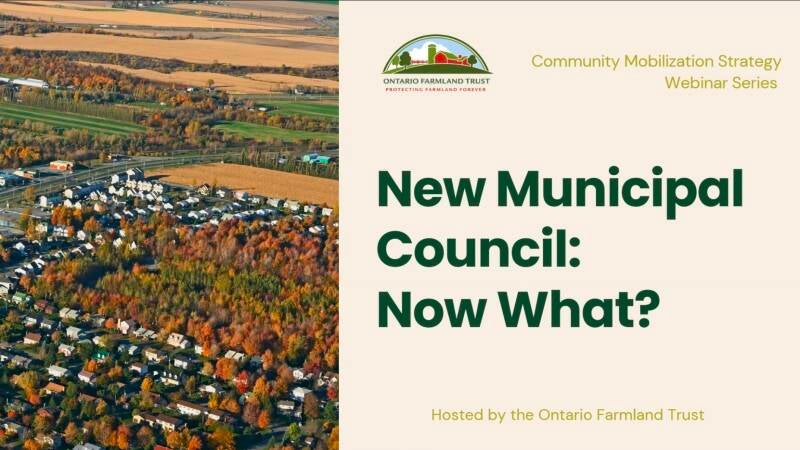
Earlier today, on November 17, 2026, I attended a timely webinar hosted by the Ontario Farmland Trust (OFT) titled "New Municipal Council: Now What?" as part of their Community Mobilization Strategy series. The session brought together municipal leaders, farmers, planners, and everyday residents from across the province to talk about how we carry election-season momentum into real, lasting policy action.
Before diving into policy, OFT opened the session by grounding our conversation in stewardship—acknowledging the traditional territories of First Nations, Inuit, and Métis peoples across Ontario, including the Dish With One Spoon territory and Treaty 3: Between the Lakes Purchase territory. It was an important reminder that caring for the land and respecting Mother Earth's resources is a shared, ongoing responsibility.
The Reality on the Ground: Why Local Decisions Matter in Welland
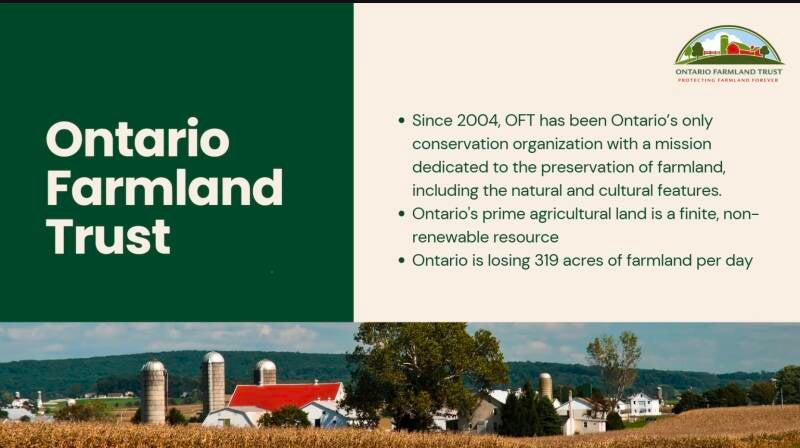
Many people are surprised to learn that Ontario’s prime agricultural land makes up less than 5% of our province’s total land base. Yet that small fraction of fertile soil supports locally produced food, employs more than 160,000 Ontarians, and contributes over $51 billion annually to our provincial GDP.
Despite its value, Ontario has lost roughly 20% of its farmland over the past 40 years. Between 2016 and 2021, the rate of loss nearly doubled to 319 acres—or about nine family farms—lost every single day. Once prime farmland is developed, it is gone forever.
Here in Welland, we feel this tension firsthand. As our city plans for future growth—including discussions around acquiring agricultural parcels for employment lands—we are making decisions that directly shape our rural-urban boundary. Even outside formal Greenbelt boundaries, our farms, wetlands, and waterways are deeply connected. As speaker Margaret Prophet reminded us, water and agricultural systems do not stop at municipal lines—decisions made in one council chamber create a ripple effect across entire watersheds.


Post-Election Momentum & How Residents Influence Council


The first half of the webinar featured Margaret Prophet, Coordinator of the Ontario Greenbelt Alliance (OGA) and Executive Director of the Simcoe County Greenbelt Coalition, who brings 15 years of grassroots organizing experience.
Margaret highlighted just how much is at stake in Southern Ontario: the Greenbelt safeguards over 750,000 acres of productive farmland, supports more than 4,000 operating farms, and provides clean drinking water for over 7 million Ontarians. When councils make decisions about housing, roads, and growth, they are shaping farmland, water, and communities all at once.
Heading into the municipal election, OGA reached out to roughly 2,400 candidates across Greenbelt and adjacent municipalities with a simple Municipal Leadership Pledge asking leaders to protect farmland, water, and nature; uphold the Greenbelt; and act in the public interest. The response was encouraging: 449 candidates signed the pledge, and 120 signatories now sit on municipal councils across 39 of the 62 Greenbelt-area municipalities.
As Margaret emphasized, a pledge isn't meant to be a stick—it is the start of an ongoing conversation. Her message to residents was clear:
"Policies don't defend themselves. People do."
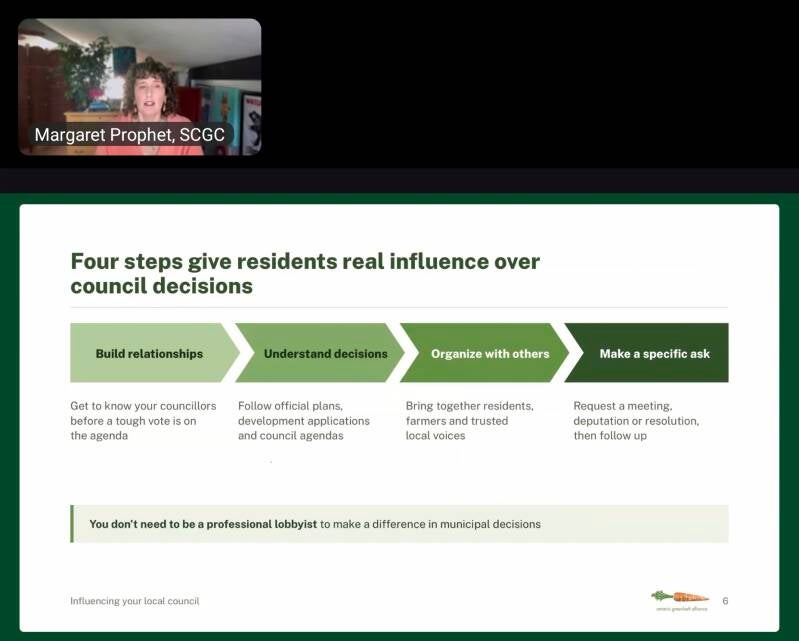
You don't need to be a professional lobbyist to make a difference at City Hall. Margaret outlined four practical steps any resident can take to shape council decisions:
- Build relationships: Get to know your councillors, mayor, and municipal staff before a tough vote hits the agenda. Democracy runs on relationships.
- Understand decisions: Follow Official Plans, development applications, and council agendas. Take time to understand both municipal priorities and what councils can legally do within provincial planning rules.
- Organize with others: Bring together neighbours, farmers, and trusted local voices. Having three community groups speak together carries far more weight than one voice alone.
- Make a specific ask: Request a meeting, register for a council deputation, or propose a clear, timely resolution—and always follow up.
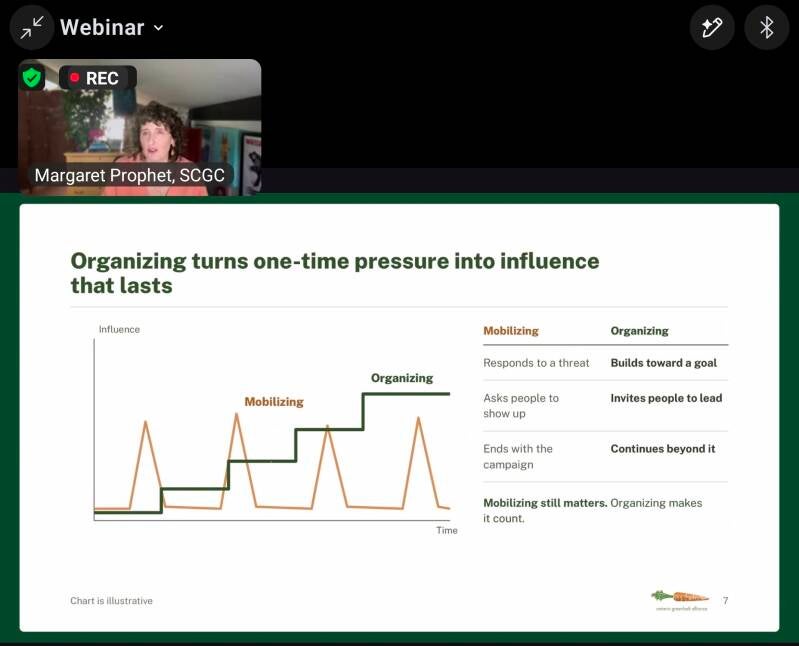
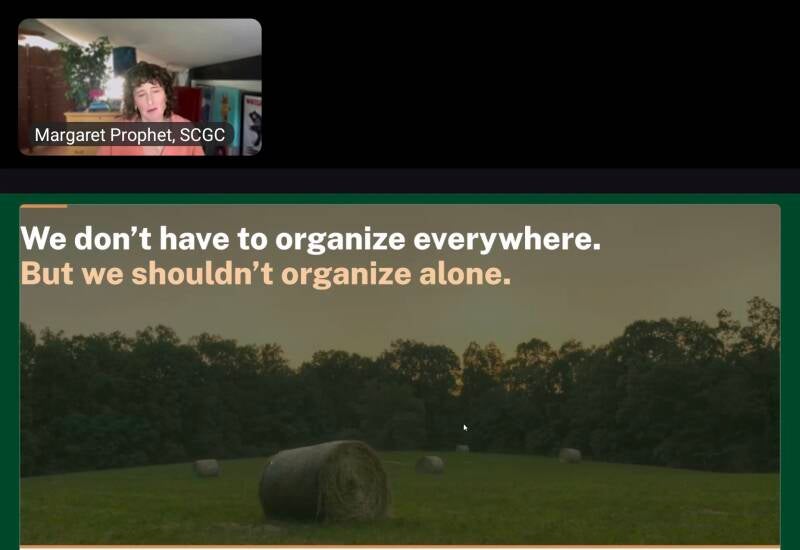
Margaret also drew an important distinction between mobilizing (short-term bursts of pressure around a single application that can leave volunteers exhausted) and organizing (building durable community networks that last across election cycles). She compared long-term organizing to an underground mushroom network: the visible wins only bloom because of the steady, connected work happening beneath the surface.
Turning Big Ideas into Grassroots Impact: "Protect the Foodbelt"


In the second portion of the webinar, farmer and AgCare Connect founder Shauna Percy shared how a single creative idea sparked province-wide media attention.
Looking at her family’s barn along Highway 6 between Fergus and Guelph, Shauna wanted to make the invisible crisis of farmland loss visible to everyone driving past. Instead of asking, "How do people even do this?", she shifted her question to: "But people DO do this—so how can we make it happen?" She reached out to aligned groups, stayed curious about differing perspectives, and invited community members into the process.
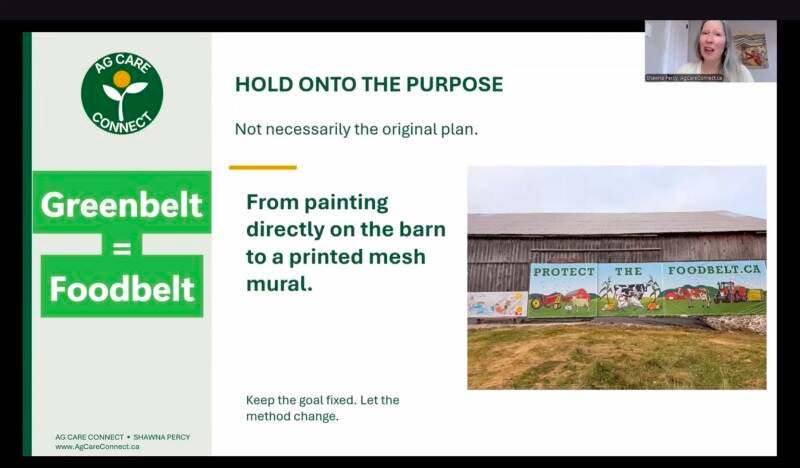
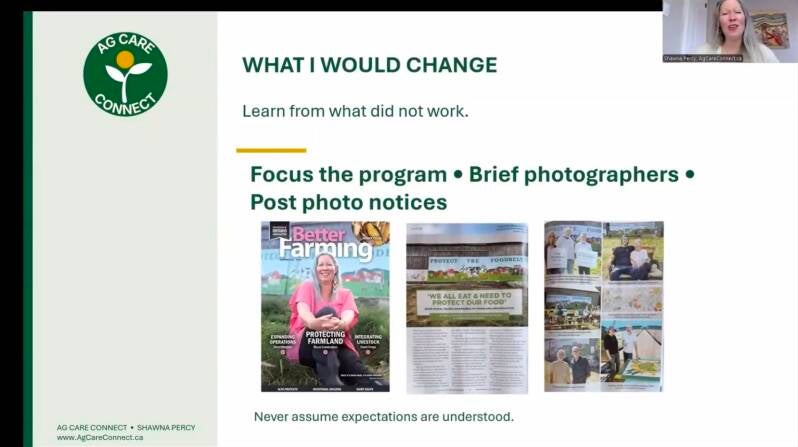
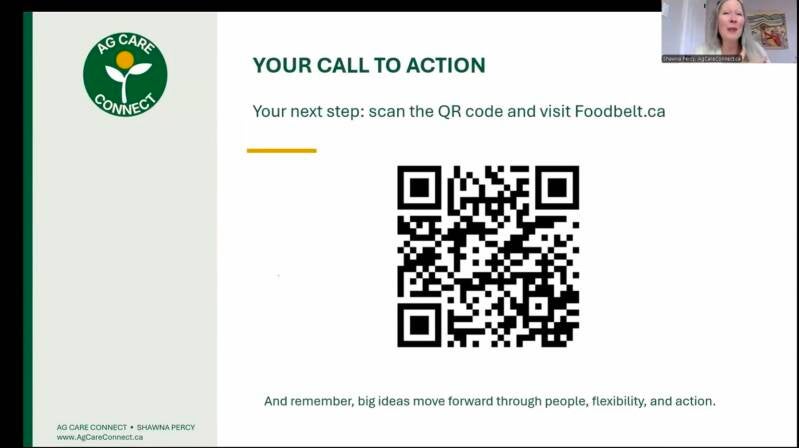
When painting directly on the barn proved logistically complex, Shauna adapted—working with artist August Swinson to install a 50-foot printed mesh mural declaring Protect the Foodbelt (Foodbelt.ca). Her takeaway: hold onto the purpose, not necessarily the original plan.


Shauna also shared a vital lesson for local advocates: event turnout does not equal campaign reach. While attendance at her September unveiling event was modest, the visual power of the mural and a clear website (Foodbelt.ca) caught the attention of CBC Radio and landed Shauna on the cover of Better Farming magazine—which was distributed to 39,000 farm operations and provincial MPPs ahead of the December 1 vote on Bill 21 (the Protect Our Food Act).
Webinar Q&A Highlights: Practical Answers for Local Communities
During the live Q&A, councillors and community advocates asked candid questions about what works on the ground. Here are the key takeaways from that discussion:
- Q: As a councillor in Welland, where do lower-tier councillors in a two-tier system like Niagara have the strongest direct leverage to curb sprawl and protect farmland—especially when agricultural parcels are being considered for employment lands outside the Greenbelt? And how will the 120 pledge signatories connect across regions? (Asked by Councillor Jessica LaHay, Welland)
- Answer (Margaret Prophet & Louisa, OFT): While provincial planning changes have created complexity, a municipality’s Official Plan remains its strongest local policy tool, and councils should avoid Ministerial Zoning Orders (MZOs) on farmland because they bypass standard planning safeguards. To keep newly elected councillors and local advocates connected across regions, OGA is launching the Greenbelt Leadership Network alongside ongoing webinars. OFT also pointed to volunteer Tom Nudds in Centre Wellington, who used a draft resolution from OFT’s toolkit to work with councillors on a rural land buyout and conservation easement near an urban boundary.
- Q: If farmland has a Conservation Easement placed on it, can it withstand settlement boundary expansions, MZOs, or Ontario Land Tribunal (OLT) decisions? (Asked by Joan Faux, Brant Land Trust)
- Answer (Alicia da Silva, OFT): Official Plan Amendments, Zoning By-law Amendments, MZOs, and other planning decisions cannot overpower a Conservation Easement to change the agricultural land use of a property. The only mechanism that could override one is expropriation—which has never happened to any OFT-protected land.
- Q: How should residents approach a council that seems determined to develop prime farmland, or keep morale up when progress feels slow? (Asked by Mike & Donna Cridland)
- Answer (Margaret Prophet): Never assume it is too early to go home. If a council seems immovable despite evidence, communities can build broader public and media visibility while always leaving council a constructive "off-ramp" rather than locking into a rigid "with us or against us" stalemate. Moreover, "small wins"—such as strengthening local water-feature policies or delaying major projects to allow for sober second thought (like Highway 413 or the Bradford Bypass)—often lead to destructive projects being adjusted or abandoned.
- Q: Is the Association of Municipalities of Ontario (AMO) an ally, and why is broad public awareness so important? (Asked by Barbara Schumacher, Green WR)
- Answer (Margaret Prophet): AMO shares municipal concerns regarding urban sprawl and infrastructure liabilities, though it focuses more on fiscal and policy issues than grassroots advocacy. Building public awareness is critical heading into future provincial and municipal elections so communities ask a fundamental question: "When have we reached the end of enough?"—recognizing that protecting water and protecting farmland are inseparable.
- Q: How is OFT engaging local Food Policy Councils, small-town fairs, farmers' markets, and rural/senior populations? (Asked by Bob Garthson & Wilma)
- Answer (Louisa & Alicia da Silva, OFT): OFT actively partners with local grassroots groups and conservation authorities and has staffed outreach tables at fall fairs, pollinator garden open houses, and farmers' markets across Ontario (including Erin, Burlington, Elora, Woodstock, Orillia, and Georgetown). Heading into the new year, OFT is expanding its community partnerships and tailoring outreach specifically for rural residents and seniors.
A Note on Smart Growth, Community, and Collaboration
Balancing the economic future of our city with the preservation of our agricultural roots is one of the most important responsibilities we share as a community. As municipal leaders, our role is to listen closely to our residents, weigh the long-term impacts of our planning decisions, and look for collaborative solutions that keep Welland strong, vibrant, and resilient. Engaging with regional organizations and staying informed through groups like the Ontario Farmland Trust helps ensure that we approach growth thoughtfully—keeping our doors open to constructive dialogue and practical stewardship.
How You Can Get Involved in Welland


Whether you are a lifelong farmer, a backyard gardener, or a resident who simply cares about where our food comes from and how Welland grows, your voice belongs at the council table.
Here are a few ways you can take action today:
- Reach Out Direcrly: As your Welland Ward 1 Councillor, I want to hear your thoughts on growth, employment lands, and protecting Welland’s agricultural land and watersheds. Never hesitate to email to share what matters to your neighbourhood.
- jessica.lahay@welland.ca
- Explore the OFT Community Mobilization Toolkit: Access fact sheets, policy briefs, sample councillor questions, and draft resolutions at ontariofarmlandtrust.ca/community-mobilization-toolkit (Password: CMS-Volunteer-2026).
- Learn More & Support Local Food Systems: Visit greenbelt.ca/learn and Foodbelt.ca to explore educational resources and ongoing campaigns.
- Save the Date for the 2027 Farmland Forum: Mark your calendar for March 11, 2027, at the GrandWay Events Centre in Elora—or tune in online—to connect with farmers, municipal leaders, and advocates from across Ontario.
Add comment
Comments